
Key Takeaways
- Students often struggle with word problems, not because they cannot calculate, but because they are learning to interpret relationships between quantities before solving.
- As questions become more complex, organising multiple pieces of information clearly becomes just as important as knowing the correct method.
- Misunderstanding keywords or context can lead to incorrect models, even when a student’s calculation skills are strong.
- Consistent, structured guidance helps students break down problems step by step, building confidence and improving accuracy over time.
Introduction
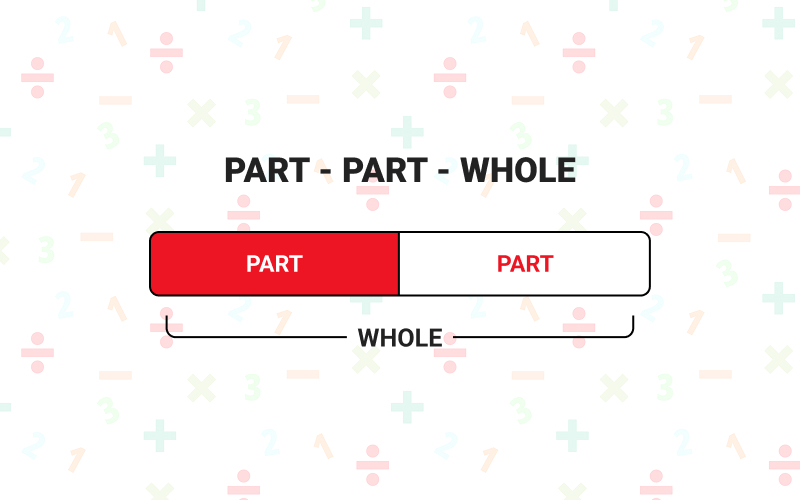
Many students can add and subtract accurately, yet still feel unsure when the same numbers appear inside a word problem. This is where bar models for addition and subtraction become especially useful. A bar model is a visual representation that uses rectangular bars to show how quantities relate, helping students see parts, totals, and differences more clearly before solving. Instead of moving straight to a calculation, students learn to represent quantities, compare parts, and understand what the question is asking.
For parents, this distinction matters. Slower progress in word problems does not always indicate weak ability. It often reflects a deeper stage of learning, where students are developing structured thinking rather than relying on memorised steps. This approach is especially relevant in Singapore’s primary maths curriculum, where students are expected to apply concepts clearly in structured word-based questions.
To truly succeed with this tool, however, students must first master a critical shift: moving from direct calculation to abstract, relationship-based reasoning.
Transition From Concrete Calculations To Abstract Relationships
At the beginning, most students approach addition and subtraction as separate operations with clear procedures. Bar models for addition and subtraction require a different approach. Instead of focusing immediately on calculation, students begin by identifying how values are connected within a problem. In bar models in primary maths, this means identifying known and unknown values and representing them visually with purpose. This transition from direct calculation to relationship-based reasoning can feel demanding.
Consequently, a student who is confident with subtraction may still hesitate when required to model a situation. This pause is not a setback. It shows that the student is learning to think more deliberately, building a foundation that supports more complex problem-solving later on.
Complexity In Multi-Step Word Problems
As questions become more advanced, students are expected to manage more than one step within a single problem. In bar models for addition and subtraction, this involves coordinating several pieces of information and understanding how each part contributes to the final answer.
This is why primary maths word problems often feel more challenging than straightforward exercises. Even when a student understands each calculation individually, difficulty can arise when structuring the full solution. Errors may occur not because the student lacks ability, but because arranging the relationships correctly requires careful planning. Through guidance, students can structure their thinking more clearly, leading to improved accuracy and greater confidence.
Misinterpretation Of Problem Context
Another common challenge lies in how the problem is understood. Bar models for addition and subtraction depend on correctly interpreting what each quantity represents before drawing it. When the context is unclear, even a correct method can lead to an inaccurate model.
Common Phrases That Affect Interpretation
Certain keywords in word problems signal how quantities relate to one another, and recognising them helps students organise their models more accurately.
- “More than” indicates a comparison or difference between quantities
- “Left” or “remaining” suggests subtraction from a total
- “Altogether” points towards combining quantities
This is why visual problem–solving in maths involves both reading and reasoning. Students need time to connect language with mathematical structure. When this connection is still developing, mistakes often arise from how the situation is represented rather than from the calculation itself.
Cognitive Load With Larger Numbers
As numbers increase and more details are introduced, the mental effort required also rises. In bar models for addition and subtraction, students are working with several pieces of information at once. They must keep track of values, decide how to represent them, and ensure that the model reflects the question accurately. This can place pressure on working memory, particularly for younger students.
It also explains why some parents searching for nearby maths tuition realise that difficulty with these questions is not simply a matter of practice. Structured guidance breaks down complex tasks into manageable steps, allowing students to focus clearly on each part without feeling overwhelmed.
Early Success May Mask Later Challenges
Students who perform well on simpler bar model questions may encounter difficulties as complexity increases. Early exercises often involve direct comparisons, while upper primary problems introduce additional layers such as extra information or less direct phrasing. This shift requires stronger reasoning, not just familiarity.
As a result, early confidence does not always translate immediately to more advanced questions. What supports long-term progress is a consistent method: understanding the problem, identifying relationships, modelling accurately, and solving step by step.
When parents evaluate PSLE math tuition options, they should look for programmes that strengthen this thinking process rather than focusing only on final answers.
Conclusion
Understanding bar models is not simply about drawing diagrams. It is about helping students interpret relationships, organise information clearly, and approach multi-step problems with clarity and control. With consistent guidance, students can develop steady problem-solving habits that improve both accuracy and independence over time.
For families looking for a tuition centre in Singapore they can trust, Simply Education helps students break down complex word problems and build strong foundations, solving complex questions in school assessments and national examinations.
To see how these strategies are applied step by step, consider exploring how Simply Education guides students in applying bar model strategies with clarity and consistency.