

Introduction
For many Primary 6 students in Singapore, the PSLE Chinese oral exam can feel like a hurdle. Unlike written papers that test memorisation and grammar rules, the oral component challenges students to read fluently, understand spoken content, and express opinions in real time.
The oral exam may seem intimidating at first, but it is important to remember that it is a skill-based test. With targeted and consistent practice, students can steadily improve in key areas such as reading fluency, pronunciation, listening comprehension, and spontaneous speaking.
This guide covers everything candidates need to know about the primary school oral assessment, including what to expect and how to prepare effectively. For students who need more structured support, consider enrolling in primary Chinese tuition for targeted guidance and personalised feedback. Alongside professional help, you can also follow practical tips to boost Mandarin oral fluency and build greater confidence.
Key Takeaways:
The oral exam makes up 25% of the total Chinese paper and includes two key components: Reading Aloud and Video-Based Conversation. Understanding this structure helps students prepare with purpose.
Examiners assess not just pronunciation, but also fluency, expression, and the ability to respond naturally. Students need to demonstrate confidence, comprehension, and clear communication in Mandarin.
Focused strategies like daily read-aloud practice, building a theme-based vocabulary bank, and using the PEEL method for structured responses can significantly boost oral performance.
Arriving early, using prep time wisely, and staying calm during the assessment are crucial. Students should listen carefully, read expressively, and respond clearly and confidently.
Enrolling in Chinese tuition offers students personalised feedback, strategic speaking techniques, and mock oral practice. This can help build lasting confidence and fluency in the PSLE Chinese oral exam. |
Overview of the PSLE Chinese Oral Exam
What is the Format of the PSLE Chinese Oral Exam?
The PSLE Chinese oral exam makes up 25% of the total Chinese paper, carrying a significant 50 out of 200 marks. Designed to assess a student’s ability to use Mandarin in real-life contexts, the oral exam focuses on pronunciation, understanding, communication, and confidence. It is split into two key components: Reading Aloud and Video-Based Conversation.
- Section 1: Reading Aloud (朗读篇章) – 20 Marks
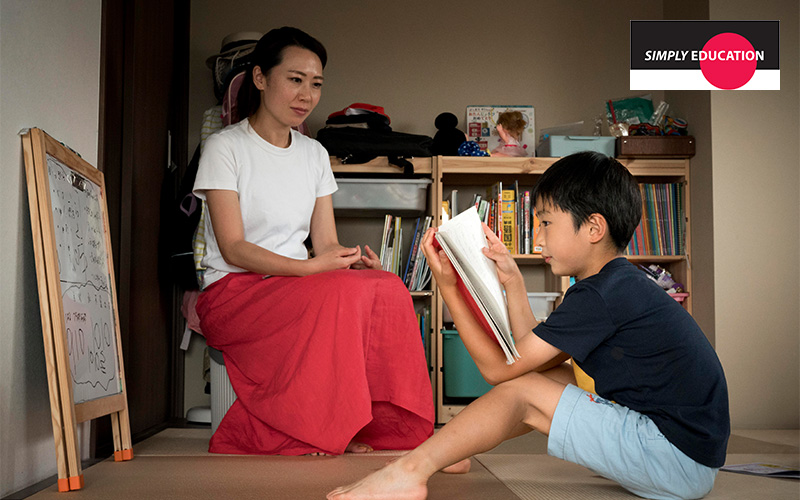
In this section, students are given a short passage to read aloud. While it may seem straightforward, this task is meant to evaluate much more than just reading ability.
Examiners are listening closely for:
- Pronunciation: Are words pronounced accurately, especially those with similar sounds or tones?
- Fluency and accuracy: Is the reading smooth and natural, without hesitation or stumbles?
- Intonation and expression: Does the student read with the appropriate tone, rhythm, and emotion to match the passage?
A strong reading performance demonstrates a solid grasp of word recognition, sentence flow, and tone sensitivity. When a student reads aloud with clarity and confidence, it shows that they understand the words and can properly convey their meanings through speech.
- Section 2: Video-Based Conversation (看录像会话) – 30 Marks
This newer format tests a student’s ability to respond thoughtfully and confidently in conversation. Students watch a short, 1-minute video, typically depicting a familiar situation such as helping others, environmental care, or healthy habits. Following the video, the examiner will ask three guided questions.

Students are assessed on:
- Comprehension: Can they grasp the main idea and details of the video?
- Language proficiency: Are they using appropriate vocabulary, sentence structures, and grammar?
- Relevance and depth: Can they link the video’s theme to personal experiences or broader societal issues?
- Confidence and fluency: Do they respond clearly, maintain a steady pace, and engage with the examiner naturally?
This section evaluates a child’s ability to think critically, articulate opinions, and communicate meaningfully in Mandarin. Instead of relying on memorised responses, students are encouraged to express their thoughts in their own words, demonstrating genuine understanding and confidence in using the language.
What Is the Duration and Setting of the PSLE Chinese Oral Exam?
The PSLE Chinese Oral Exam usually lasts about 10 minutes, but every second counts. Students are assessed one-on-one by an examiner in a quiet room, allowing for focused evaluation without distractions. The session is divided into two parts: approximately 2–3 minutes for Reading Aloud and 6–7 minutes for the Video-Based Conversation.
Before the actual assessment begins, students are given 10 minutes at a preparation station. During this time, they are allowed to:
- Read the passage silently to familiarise themselves with the text.
- Watch the video clip that will be used for the conversation segment.
Students can pause, replay, or stop the video during the preview phase to ensure they fully grasp the content and underlying message. Do not underestimate this preparation time. This short period can help students to reduce anxiety and organise their thoughts ahead of the conversation.
To make the most of this, students should apply effective video conversation strategies. For instance, they can try to identify the main theme, note key visual details, and relate the scenario to their personal experiences.
What Do Examiners Look For in the PSLE Chinese Oral Exam?
To assess PSLE language performance fairly and thoroughly, examiners are trained to evaluate students’ communication skills, not just whether they can read in Mandarin. Let’s take a closer look at what examiners focus on in each section.
1. Reading Aloud (朗读篇章)
This section may seem straightforward at first glance, but examiners pay close attention to how well students deliver the passage. While accurate pronunciation is important, what truly matters is the ability to read with fluency, expression, and confidence.
Here’s what examiners look for:
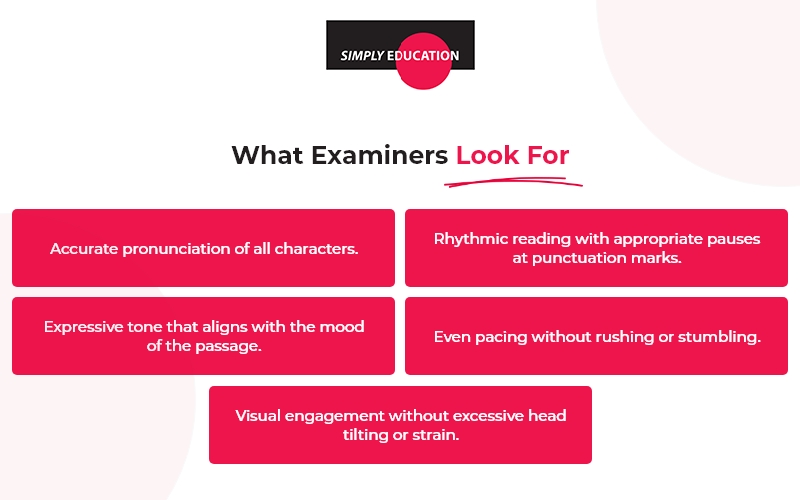
- Accurate pronunciation of all characters, especially those that are easily misread or confused.
- Rhythmic reading with appropriate pauses at punctuation marks, which reflects a solid grasp of sentence structure and meaning.
- Expressive tone that aligns with the mood of the passage (e.g. joyful, serious, or contemplative.)
- Even pacing without rushing or stumbling to demonstrate comfort with vocabulary and sentence flow.
- Visual engagement, such as reading clearly while maintaining steady eye movement, without excessive head tilting or strain.
Apart from learning strategies in school, students can gain supplementary support from Chinese tuition. These lessons offer personalised guidance, focusing on reading techniques, pronunciation, and oral fluency. As such, students can build confidence and perform more effectively in this section of the PSLE Chinese oral exam.
2. Video-Based Conversation (看录像会话)
This section assesses a student’s ability to respond thoughtfully to real-life situations shown in a short video. Students should be able to observe, interpret, and reflect on the scenario and communicate their thoughts in structured, fluent Mandarin.
Here’s what examiners look for:
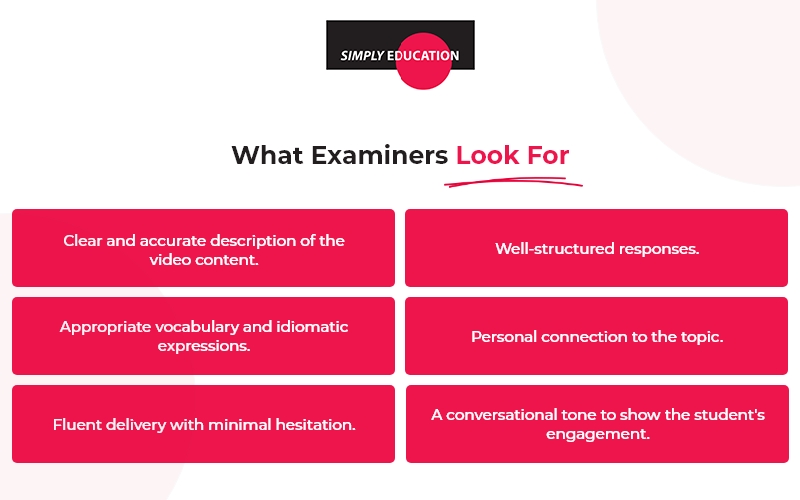
- Clear and accurate description of the video content, along with insights into why the scenario is relevant or meaningful.
- Well-structured responses that use full sentences and connect ideas logically.
- Appropriate vocabulary and idiomatic expressions, especially those related to the video’s theme, to demonstrate topic familiarity.
- Personal connection to the topic, where students offer examples or reflections from their own lives at home, in school, or in society.
- Fluent delivery with minimal hesitation, clear articulation, and consistent use of Mandarin.
- A conversational tone to show the student is engaging naturally with the examiner, instead of reciting memorised scripts.
Strong performance in this section is often supported by structured speaking practice during guided oral sessions. Whether through school or a Chinese tuition centre in Singapore, regular exposure to different themes and conversation formats helps students build the confidence to speak clearly and think critically.
Useful Tips to Ace Oral Exam Components
How to Prepare for the PSLE Chinese Oral Exam
Success in the PSLE Chinese oral exam doesn’t happen overnight. It’s built through consistent, focused practice that strengthens both reading and speaking skills. In this section, we share effective strategies to guide students’ preparation for the exam.
1. Reading Aloud (朗读短文)
- Daily Read-Aloud Practice
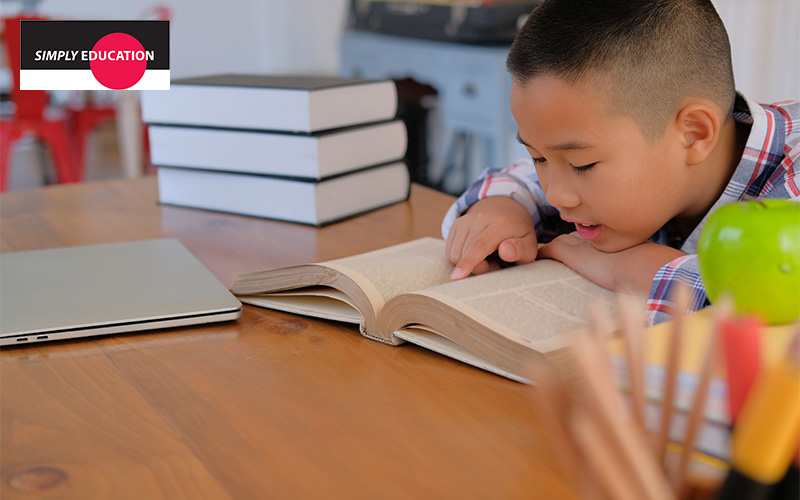
Parents should encourage their child to read a short passage aloud each day, using materials like textbooks, news articles, or storybooks. The focus should be on developing natural fluency through expressive reading techniques. By varying tone, pacing, and emotion to match the meaning of the text, students can initiate an engaging speech during the oral exam.
- Target Commonly Confused Characters
Focus on characters that are often mispronounced or mixed up. An example can be “行” (xíng) vs “兴” (xìng). Regular drills of these words can reduce errors during the exam.
- Use Recording Tools for Self-Review
Students should record themselves reading aloud. Listening to the playback helps them to identify issues in tone, pacing, or clarity that can be refined over time.
- Group Words for Natural Flow
Instead of reading word by word, try grouping words into meaningful chunks. This improves rhythm and makes the reading sound more fluent and less mechanical.
- Practise Intonation and Emotion
Match tone and pitch with the mood of the passage. Reading with the right emotion enhances engagement and shows a deeper understanding of the text.
2. Video-Based Conversation (看录像会话)
- Apply the PEEL Framework
To structure responses clearly and logically, use the PEEL method:
-
- Point: State what was seen in the video.
- Explain: Highlight its importance or message.
- Example: Share a personal or relatable story.
- Link: Reflect on what can be learned or how it applies to daily life.
- Build a Theme-Based Vocabulary Bank
Create a list of useful words and phrases for common topics. For instance, phrases like 助人为乐 (finding joy in helping others) or 保护环境 (protecting the environment) can elevate language quality and show subject familiarity.
- Practise Expressing Opinions Confidently
Parents can help their child practise forming and voicing opinions in a clear and concise manner. Encourage them to speak naturally and maintain eye contact, which reflects confidence and engagement with the examiner.
- Simulate Real Exam Conditions
Role-play mock oral exams at home using video clips and sample questions. This reduces nervousness and familiarises students with the exam flow. Practising under timed conditions also helps improve response pacing.

- Stay Updated on Common Themes
Discuss popular oral exam themes such as kindness, healthy living, environmental awareness, and school values. Use news articles or daily experiences to spark deeper reflections and discussions that can be used during the exam.
What to Do on Exam Day
After the previous section on preparation strategies, the next step is knowing how to stay composed and focused when it matters most. The PSLE Chinese oral exam can be nerve-wracking, but it is manageable with the right mindset and calm execution.
Approach the big day with these exam preparation tips:
1. Before the Exam Starts
- Arrive Early and Stay Calm
Give yourself enough time to settle in and mentally prepare. Rushing at the last minute can increase anxiety and affect performance.
- Use Prep Time Wisely
During the 10-minute preparation period, read the passage carefully and watch the video with full focus. This time sets the tone for the entire oral session.
- Preview the Video with Intention
Don’t just watch passively. Pause and reflect: What is the main theme? Is there a value being communicated, such as kindness, teamwork, or responsibility? Taking mental notes helps form a stronger response later.
2. During the Oral Exam
- Read Clearly and Expressively
Focus on clarity, correct pronunciation, and expressive tone. Match your voice to the mood of the passage. Remember to avoid sounding flat or monotone.
- Listen Carefully to the Questions
Pay close attention to what the examiner asks. Misunderstanding a question can derail your response, so stay alert and respond to the question directly.

- Think Before You Speak
Take a short pause to organise your thoughts. A brief moment of reflection can show maturity and self-assurance.
How Chinese Tuition Can Support PSLE Chinese Oral Exam Preparation
While self-practice plays a part, tutoring offers structured support that helps students fine-tune their performance and build lasting confidence. Whether through in-person classes or finding Chinese tuition near you, this added guidance can make a difference in the following ways:
1. Personalised Feedback
Tutors offer targeted corrections on tone, pronunciation, sentence structure, and delivery. This helps students identify specific weaknesses and refine their speaking skills. By addressing these issues early, they are less likely to repeat common mistakes during the actual exam.
2. Strategic Response Techniques
Chinese tuition equips students with structured methods like theme-based vocabulary to organise their thoughts. These strategies support them in crafting more insightful responses, including thoughtful reflections and meaningful personal connections.
3. Confidence-Building Activities
Through simulated oral exams, guided video analysis, and spontaneous speaking drills, students become more comfortable thinking on their feet. These exercises mimic real exam conditions, helping students sharpen their communication skills and respond more confidently.
Frequently Asked Questions
1. What if I don’t know what the picture is showing?
Start by describing what you can see (e.g. the people, place, actions). Then, guess what might be happening and give your thoughts. Remember, examiners want to hear how you communicate and not just the “right” answer.
2. What should I do if I forget a word during the PSLE Chinese oral exam?
Stay calm and don’t skip the word. For instance, if you forget the word “责任” (zé rèn- responsibility), you may use the rough pronunciation like “zhé rèn” to show you know the word.
3. How can I sound more confident during the PSLE Chinese oral exam?
Practise regularly, maintain good posture, speak clearly, and don’t rush. Imagine you’re having a friendly conversation with someone and communicating naturally.
Conclusion
Preparing for the PSLE Chinese oral exam is about building the confidence to communicate clearly and effectively. With consistent practice and a calm mindset, every student has the potential to improve and succeed. Remember, fluency and confidence come with time, effort, and the right support.
At Simply Education, our Chinese tuition programmes in Tiong Bahru and Hougang are designed to make learning Mandarin both enjoyable and effective. With a student-centred approach, interactive lessons, and passionate teachers, we help your child strengthen their reading, speaking, listening, and writing skills in a supportive environment.
Contact us to check on our class availability.